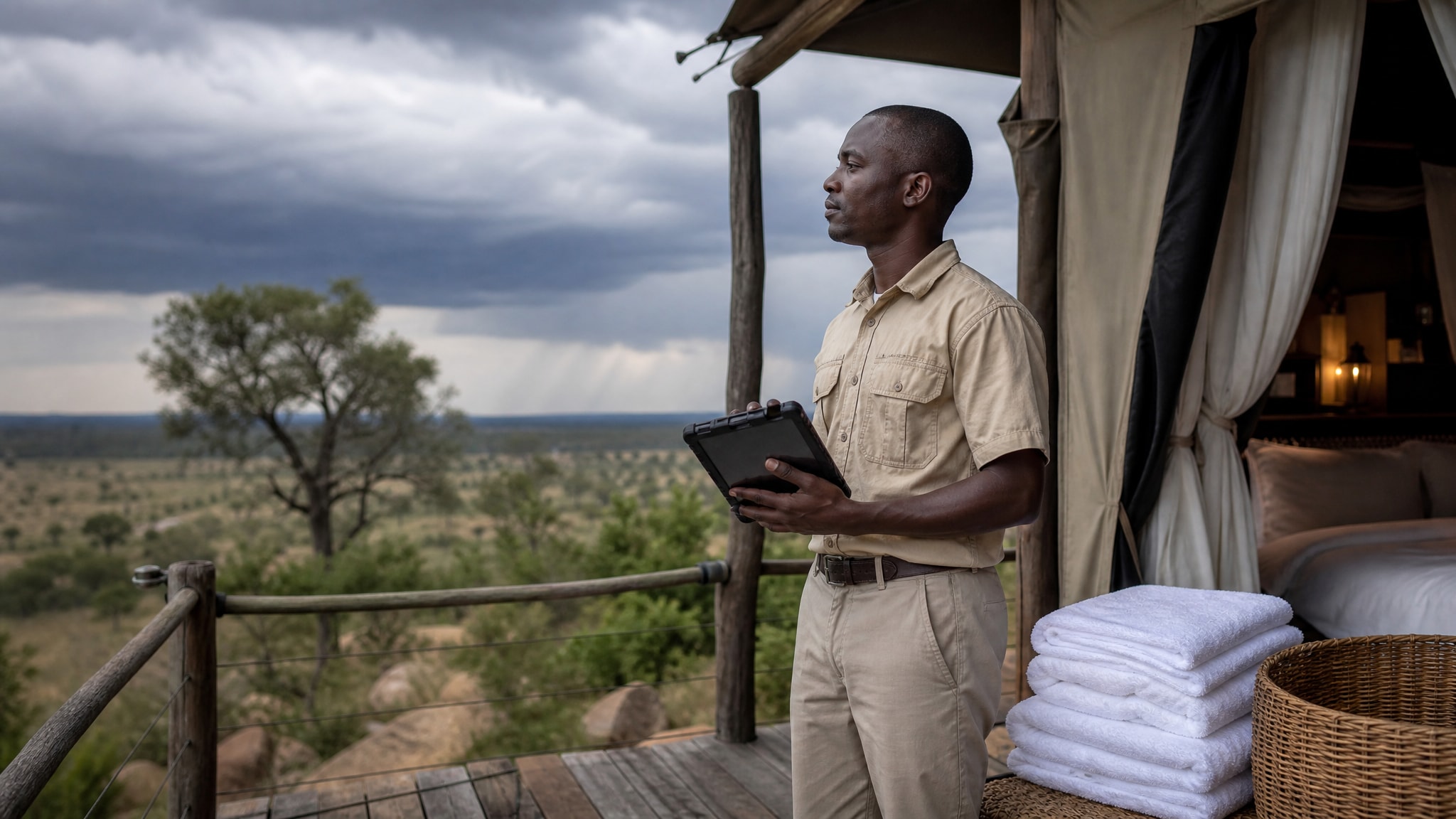
Hotel housekeeping apps assume fixed checkout times. Safari camps run on drives, transfers and weather. Here is what lodge housekeeping software needs to do. Housekeeping at a safari camp doesn't follow a fixed schedule. Game drives run long or end early. Transfers shift with flights and road conditions. A storm can send guests back to camp two hours before anyone planned for. The tent that was supposed to be empty until lunch now has guests who want a shower. Most housekeeping software was built for city hotels, where checkout is at eleven, rooms turn over by three, and the day follows the clock. At a camp, the day follows the bush. That is why lodge housekeeping software has to work differently. Why fixed schedules fail at camp A fixed roster assumes you know when each tent will be free. At a camp, you often don't. Housekeepers end up working from a printed list, a whiteboard or a WhatsApp group, and every change means someone has to pass the message along by hand. The result is familiar to anyone who has run a camp. Staff service a tent that guests are about to walk into. Another tent waits too long. Managers spend the day checking where things stand instead of running the camp. What housekeeping needs to see The housekeeping team needs the same plan as everyone else. That means arrivals and departures, which tents are being turned over, and what the day's activities and transfers look like. When housekeeping, activities and transfers sit in one system, the team works from one plan instead of three versions of it. In LodgeFlow, housekeepers work from their own Housekeeping Portal on the floor. Managers assign rooms, track turnover and keep housekeeping in step with arrivals and departures. Guides see their day on a Guide Portal, so the whole camp is working from the same information. Working when the signal drops Connectivity at camps is unreliable, and housekeeping can't stop when it fails. Software for the bush has to keep working without a signal and catch up once the connection returns. LodgeFlow is built that way: your team keeps working when the connection drops, and updates flow through automatically when it returns. Maintenance and handover Housekeepers are usually the first to notice what's broken: a leaking tap, a torn net, a door that doesn't close. Those reports need to go somewhere. LodgeFlow lets you log an issue when it's reported and follow it through to resolution, so nothing gets lost between shifts. Staff scheduling and handover notes live in the same place, so each shift starts knowing what came before. Alongside your reservation system You don't need to replace your reservation system to run housekeeping properly. LodgeFlow sits next to the one you already use. Reservations stay there, and daily operations, including housekeeping, run in LodgeFlow. If you want to see how the costs compare, read our guide to [safari lodge software costs]. Frequently asked questions Why do hotel housekeeping apps struggle at safari camps? They assume fixed checkout times, standard rooms and a permanent internet connection. Camps have tents of different layouts, schedules that move with drives and weather, and signal that comes and goes. Does housekeeping software work without internet? It should. Housekeeping can't wait for a signal, so camp software needs to keep working offline and sync when the connection returns. LodgeFlow does this. Do we have to replace our reservation system? No. LodgeFlow runs next to your existing reservation system. Reservations stay where they are, and daily operations run in LodgeFlow.
Lodge Housekeeping Software That Tracks Guest Movements
11 October 2026